










How Carnival Mas Costumes Are Made
A carnival costume is engineering and art at once. Here's how mas costumes are built — from the wire frame to the final feather.
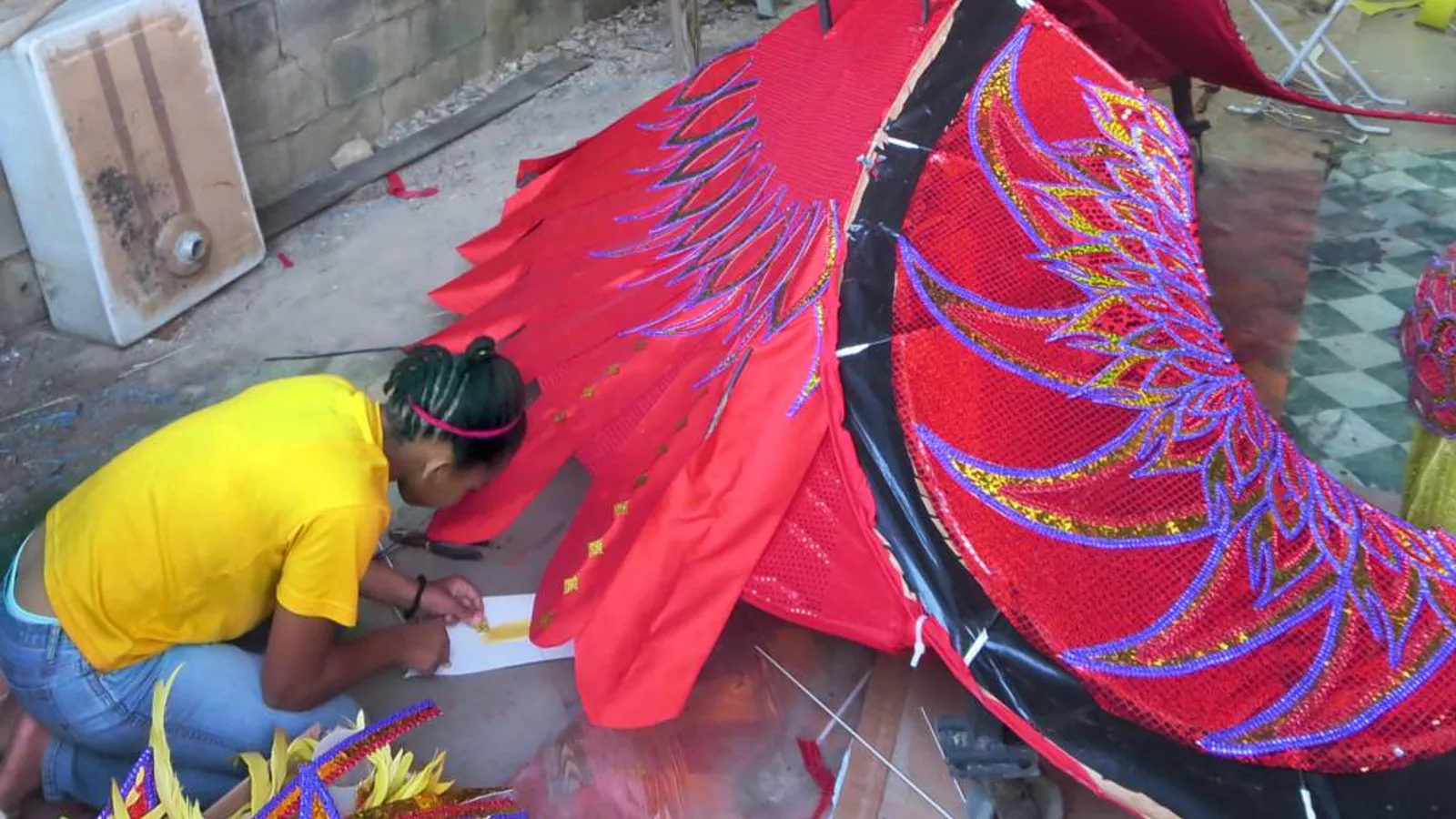
A carnival costume is part sculpture, part engineering, and part painting. The biggest ones — the Kings and Queens — can tower several metres over the person wearing them. This guide walks through how mas costumes are actually made.
1. Design and theme
Every costume starts with a theme. A designer (often called a mas man or mas woman) sketches characters and sections that tell the band's story, then plans the colours, materials, and silhouette.
2. Wire-bending — the frame
The signature craft of mas is wire-bending: shaping steel wire by hand into the costume's three-dimensional frame. This skeleton defines the costume's shape and must be strong yet light. Wire-bending is an endangered art form, and passing it on is a core part of what S.O.C.A. teaches.
3. Structure, balance, and mobility
Large costumes are engineered so a single person can carry or wheel them. Builders add harnesses, supports, and hidden wheels so the masquerader can dance and spin the piece without being overwhelmed by its size and weight.
4. Decoration
This is where the costume comes alive: feathers, beads, sequins, fabric, moulded shapes, gems, and paint are layered onto the frame. Decoration can take weeks and is what gives each costume its shimmer on the road.
5. Fitting and the road
Finally the costume is fitted to its masquerader and tested for movement. On carnival day, it joins the band in the Grand Parade — the payoff for months of work.
Learn the craft
These skills are exactly what our mas-making workshops and camps pass on to youth, and the mas bands in our directory are the artists who keep the tradition alive.
Photo: D-Stanley, CC BY 2.0, via Flickr (resized).
Frequently asked questions
What is wire-bending in carnival?+
Wire-bending is the craft of shaping steel wire by hand into the three-dimensional frame of a mas costume. It forms the costume's skeleton and is one of the signature, endangered skills of carnival arts.
How long does it take to make a carnival costume?+
Large showpiece costumes like Kings and Queens can take months of skilled work — design, wire-bending, structural engineering, and layered decoration.
How do huge carnival costumes move?+
Builders engineer them for balance and mobility, adding harnesses, supports, and hidden wheels so one masquerader can carry, dance, and spin the costume.
What materials are used to decorate mas costumes?+
Feathers, beads, sequins, fabric, gems, moulded shapes, and paint are layered onto the wire frame to create the finished costume.
Experience it for yourself
S.O.C.A. keeps Caribbean carnival culture alive year-round through events, workshops, and our artist community.